A month shaped by rain
Aati is the fourth month of the traditional Tulu solar calendar, following Paggu, Besa and Kaartel. It falls broadly across July and August, in the southwest monsoon. It is a whole season of household practices, food and performance, rather than the name of one festival. Aati Amavasya is a particular new-moon observance within that month; an Aati food gathering can take place on a different day.
The setting matters. Karnataka Tourism describes coastal Karnataka and the Western Ghats as receiving heavy monsoon rain between June and September. Aati belongs inside that wet period. Food that keeps, work arranged around rain, sheltered gathering places and performances that move between households make more sense against this background than as an unrelated list of customs.
The annual cycle also connects Aati with Bisu Parba, the new year at the start of Paggu. Read the two together and a calendar emerges: the anticipation of a new agricultural year followed by the practical demands of its rainiest months.
Food is the most familiar way into Aati
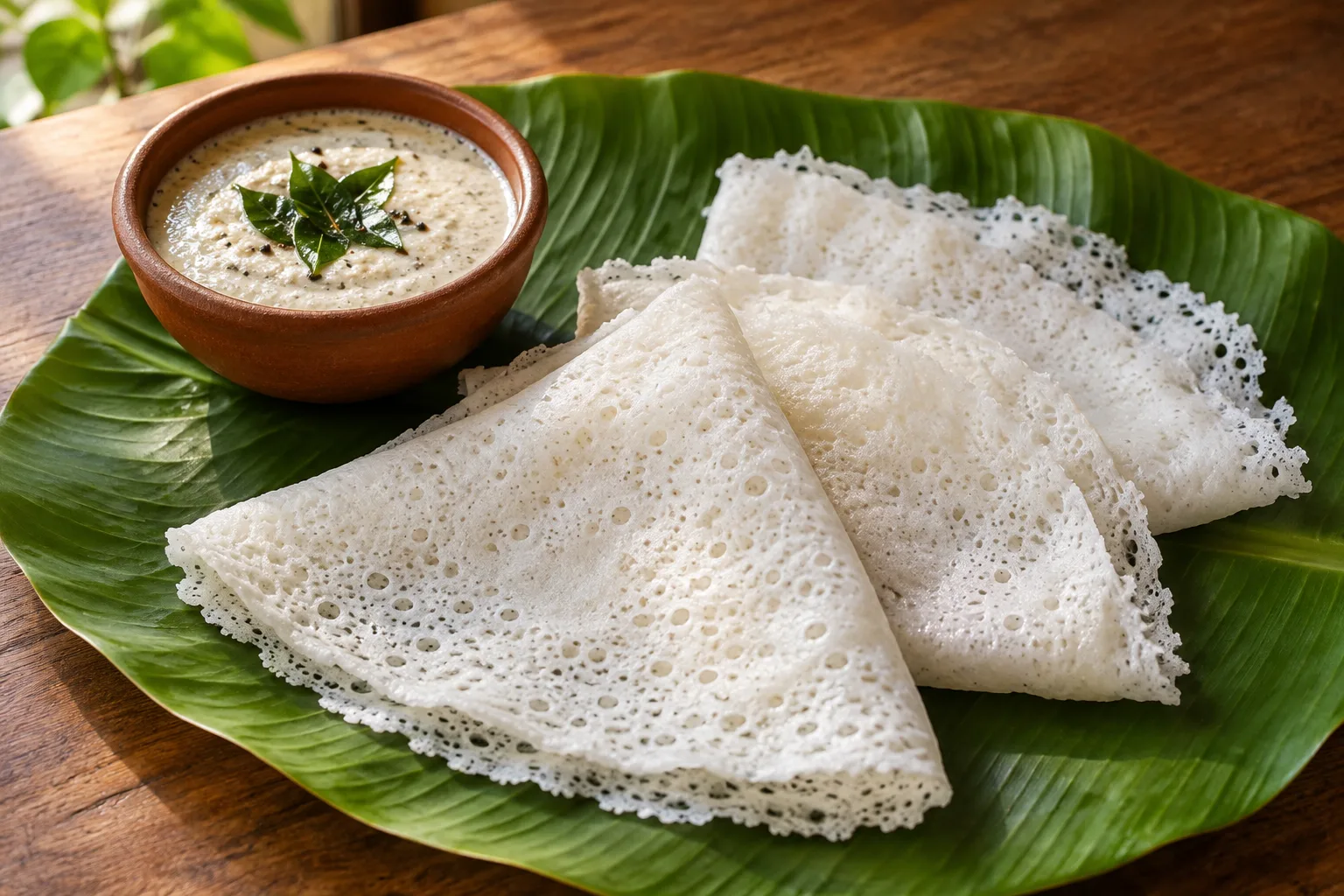
An Aati table can bring together leaf preparations, rice dishes, pulses, preserved ingredients and sweets. A useful documented example comes from St Philomena College in Puttur. Its Aatida Tenas programme displayed more than twenty homemade dishes, including patrode, halasina gatti, hurulichatti, uppin sole palya and mente ganji. These are concrete dish names, not a prescribed menu for every Tulu household.
The names also make a food gathering more informative. A label that identifies the dish, its main ingredients and the cook tells a visitor more than a general banner announcing traditional food. Two dishes with a similar English description can use different textures, preparations or accompaniments. Seeing and tasting them side by side gives those distinctions meaning.
At home, one carefully prepared family dish can carry as much knowledge as a large buffet. The useful question is how it is made and served in that household: as a meal, an accompaniment, a snack or a preparation associated with a particular day. Our Mangaluru food guide places this seasonal cooking within the wider coastal kitchen.
Aati Kalenja is a community performance tradition
Aati Kalenja is closely associated with the month, but the name should lead to performers and their traditions as well as to costume. IGNCA's Cultural Mapping of India places Aati Kalenja within a wider group of seasonal Tulu performances. Its discussion relates these arts to communities including Nalike and Mugera, alongside other groups and other forms. It does not make one generic dance stand for all coastal ritual life.
Recent field documentation provides a more specific picture. The Karavali Wikimedians' Aati project identifies a Mugera Aati Kalenja team from Belthangady and an Aati Kalenja team from Khandige, as well as work in Sullia. These place and community names are valuable because they show that the tradition is carried through particular people and settings.
The performance is commonly explained within local beliefs about protection and well-being during Aati. That religious meaning is part of its identity. A brief stage presentation can introduce the movement or dress, while a household visit belongs to a different social occasion. Both can be described accurately without treating them as interchangeable experiences.
Songs belong with the movement
A costume can be photographed in an instant; a song unfolds over time. The Aati documentation project includes a recording identified as a Mugera Aati Kalenja paddana and separate material on the tembare drum. This reminds a listener to attend to the voice and accompaniment, rather than regard the visual figure as the whole performance.
There is a rewarding connection here with Tulu paddanas. A sung narrative can carry names, relationships, journeys and remembered incidents that an unfamiliar spectator would otherwise miss. Even without understanding every line, one can follow changes in pace, repeated phrases and the exchanges between voice and action. A short explanation of the song's subject helps much more than simply calling it a folk song.
The Puttur college programme brought paddana singing into its Aati celebration alongside food and discussion. That combination is useful: a meal can be the accessible entry point, while language and performance give the gathering depth. It also allows students to participate as singers and interpreters, rather than only as an audience for an older generation.
Chennemane and the pleasure of a shared game
Aati gatherings also make space for games. Deccan Herald's report of the 2010 Pilikula celebration specifically records a Chennamane competition. The game's presence is a useful correction to an account of Aati consisting only of ritual or difficult weather. Gathering, concentration, conversation and friendly competition are also part of the season's public memory.
What Aati Amavasya means
Amavasya refers to the new moon. Aati Amavasya, also written Aati Amavase, is therefore a particular observance within the month. One documented custom is paleda kashaya, associated with the bark of the paale tree, identified as Alstonia scholaris. Yenepoya Ayurveda Medical College recorded an Aati Kashaya programme on 24 July 2025. That is evidence of an organised observance on that date, not a date to reuse for future years.
Accounts of the custom often describe hopes for health and protection. These beliefs explain why the preparation matters culturally; they do not by themselves establish clinical benefits, a safe dose or suitability for a particular person. A description of Aati need not turn into instructions for collecting bark or treating illness. Anyone considering a medicinal preparation should discuss it with a qualified clinician, particularly when medicines or an existing condition are involved.
Keeping this distinction clear leaves room for a fuller cultural account. The named day, its place in the calendar and the family memories attached to it are meaningful subjects in their own right.
The guthu house and the public gathering
Aati programmes at Pilikula have helped bring domestic and agricultural traditions into a public setting. A guthu house provides a particularly readable setting for that encounter: visitors can relate a demonstration or a gathering to the spaces of a coastal home, rather than see every activity isolated on a stage.
IGNCA's cultural mapping places seasonal performances alongside sowing, harvest, cattle observances and other parts of an agricultural year. This is a useful way to understand an Aati programme too. The meal, the game and the song can be different entrances into a shared history of living and working with the seasons. They need not be forced into a single origin story.
Public programmes are also contemporary choices. Organisers select what fits an afternoon, available performers and a mixed audience. A food exhibition or college presentation is valuable on those terms. Its arrangement should not be mistaken for the exact sequence that every household followed in the past, or a rule that families must now reproduce.
Aati beyond nostalgia
Aati continues through people adapting what they know to current life. The recent Wikimedia project documented traditions across Dakshina Kannada and Kasaragod, while colleges have made room for songs, food and discussion. These activities show several forms of participation: performing, cooking, playing, listening and studying. They do not require everyone to have grown up in the same kind of home.
For a family living away from Tulunad, a manageable celebration might bring together one familiar dish, a game and an explanation of the month. Giving each activity time is more useful than trying to fit every named custom into a single evening. A child can learn why the dish is associated with the season, an adult can learn a game, and both can hear a song they had only encountered as a title.
The lasting interest of Aati lies in those connections between weather, work and shared life. Its food and performances belong to identifiable communities, but the questions they open are welcoming: how people met the rains, what they kept close, and how they made the season their own.
Research notes
Karavali Wikimedians: Tuluvas Aati Month field documentation report; St Philomena College: Kala Serige, Aatida Tenas; IGNCA: Cultural Mapping of India, Tulu seasonal performances and agriculture; Yenepoya Ayurveda Medical College: Aati Amavasya programme, 24 July 2025; Deccan Herald: Aati comes alive in Pilikula, 24 July 2010; Deccan Herald: A saga of the glorious Tulu calendar; Karnataka Tourism: Weather and best time to visit.
Research checked 7 October 2026. Our editorial approach.