Begin with the shape of a meal
Mangaluru’s food becomes easier to understand when dishes are considered by what they do at the table. Some provide the main rice accompaniment, some supply the curry or dry preparation, and others belong to breakfast or an afternoon snack. A list of famous names can hide those relationships. Learning the difference between a soft dosa, a steamed dumpling and a crisp rice sheet gives a much more useful introduction.
Karnataka Tourism’s coastal food account places rice preparations, coconut, seafood and several vegetarian and meat dishes within the same regional picture. That breadth matters. Mangaluru does not have one household menu, and the food of its communities cannot be reduced to the dishes most frequently advertised by restaurants. This guide explains a selection through form, ingredients and serving context. It is cultural orientation, not a tested recipe collection or a ranking of restaurants. The Tulunad overview supplies the multilingual and community setting behind the plate.
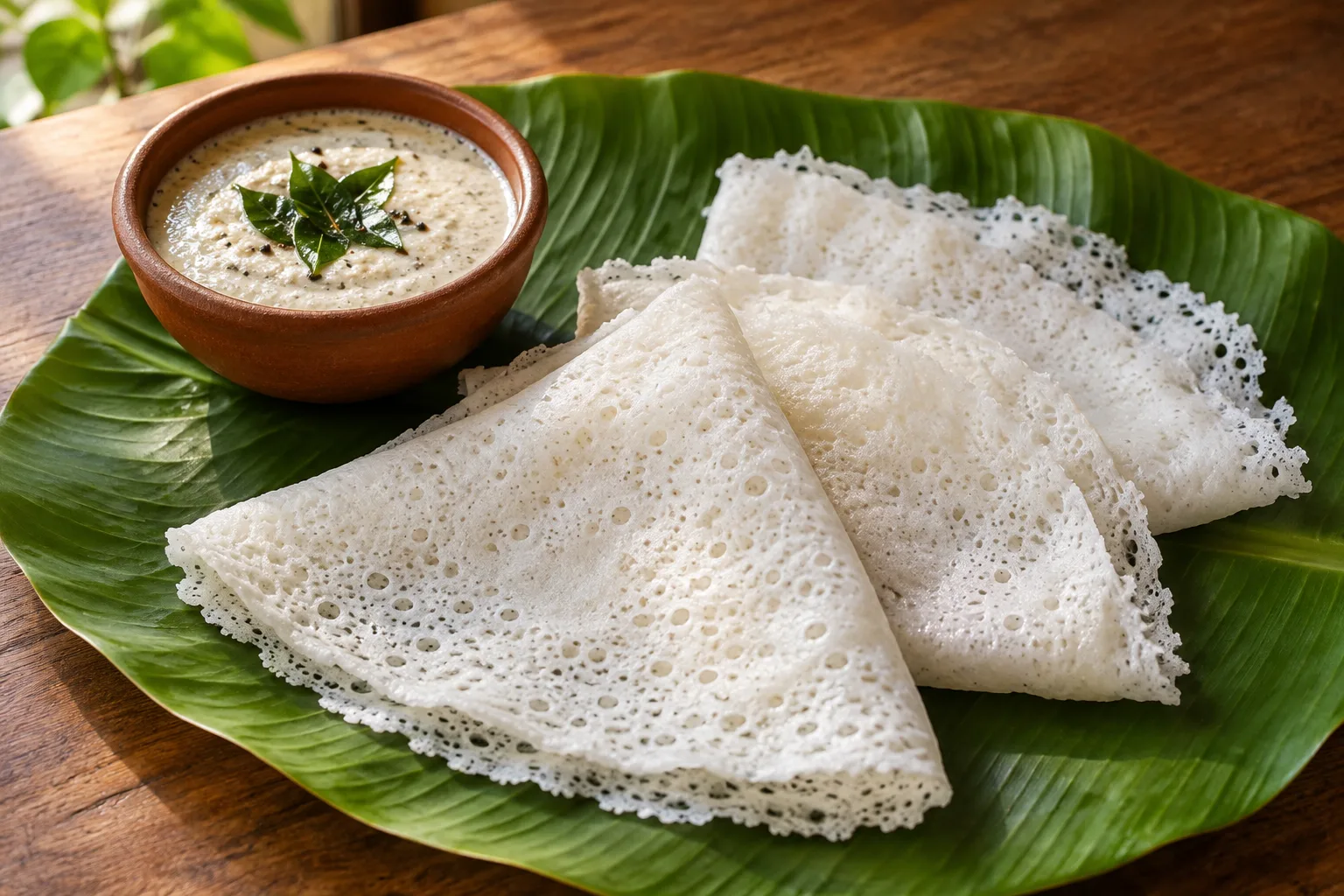
Neer dosa: a soft accompaniment with several possibilities
Neer dosa, also written neer dose, is made from soaked rice ground into a thin batter. Karnataka Tourism distinguishes it from the fermented rice-and-urad batter associated with many other dosas. Its account identifies both savoury accompaniments, including chutney and curries, and a sweet pairing of coconut and jaggery. The preparation’s versatility is part of its regional role.
The useful distinction is therefore not simply dosa versus rice. It is the difference between one batter, texture and serving purpose and another. A thin, soft accompaniment allows the dish beside it to carry much of the seasoning. The same basic preparation can appear in meals with very different flavour profiles. Its presence alone does not identify a meal as vegetarian or non-vegetarian, because that depends on what accompanies it. For readers encountering the name on a menu, the accompaniment is as important as the dosa itself. No claim about a single original inventor is needed to explain its character.
Kori rotti: the combination is the point
Kori rotti brings chicken curry together with thin, crisp rice rotti. The state’s cuisine publication associates the combination with Bunt food, while Mangaluru recipe writer SaiGeetha Pai distinguishes kori, chicken, from ghassi, curry, and rotti, the crisp rice component. Her account also notes that households often obtain the rotti separately rather than making it as part of the curry preparation.
That distinction prevents a common misunderstanding. The rotti here is not simply the soft wheat flatbread that an unfamiliar diner might expect from a similar-sounding name. Nor is the dish just another label for chicken curry. Its identity depends on the meeting of curry and rice sheets. Comparing it with neer dosa shows how the same broad role, an accompaniment for a curry, can produce a different eating experience through texture. A Bunt association is meaningful, but it does not require claiming that people from other communities neither prepare nor enjoy the dish.
Pundi: rice takes a steamed form
Pundi or pundi gatti is a rice dumpling. In her documented household version, Sumana of Udupi Recipes describes coarsely ground rice with coconut, shaped and steamed, with seasoning treated as optional. Her account is useful precisely because it records a particular cook’s method rather than declaring every household version identical. KonkaniFoodRecipes also documents seasoned rice dumplings under the names undi and oondi and relates them to pundi gatti.
Placed beside neer dosa and rotti, pundi makes the region’s use of rice more visible. The ingredient is shared, but the preparation produces a substantial shaped piece rather than a thin sheet. The comparison helps an unfamiliar reader understand why these names are not interchangeable. It also shows the value of preserving local terminology: related preparations can be named differently in different languages or households. A name can guide a conversation about food without proving that two recipes have exactly the same ingredients, seasoning or history.
Mangalore buns are fried, and banana matters
Mangalore buns, also called banana buns, can surprise anyone expecting a baked bread roll. Karnataka Tourism describes a sweetish fried preparation using ripe banana and flour, with curd and other ingredients in its published version. It identifies chutney and a vegetable accompaniment among the ways it is served. The English word bun is therefore not a reliable guide to its preparation.
The dish also complicates a simple sweet-versus-savoury division. A mildly sweet item can sit comfortably beside a savoury accompaniment. That relationship is more informative than classifying it only as a dessert. The precise sweetness, flour choice and texture may vary, so a cultural guide should describe the recognisable form without presenting one ratio as universal. Compared with the rice preparations above, buns offer a different base ingredient and method. They widen the picture of coastal food beyond rice and curry while remaining closely associated with Mangaluru and neighbouring towns.
Patrode brings the leaf into the dish
Patrode, also spelt pathrode, uses colocasia leaves as an integral part of the food. Karnataka Tourism describes layered leaves coated with a seasoned mixture, rolled and steamed, with tamarind and jaggery among the ingredients in its version. It also notes that patrode can be served in different forms after preparation. This is not a leaf used only as a plate or wrapper that is discarded.
That makes it a useful contrast with the preceding dishes. The relationship between leaf and filling creates the preparation’s structure, while sour, sweet and spicy elements can coexist. A short description, however, is not a safe foraging or cooking instruction. Colocasia requires appropriate identification and preparation, and raw leaves should not be eaten. This guide deliberately gives no improvised processing times or claim that a household ingredient neutralises all irritation. The cultural point is the knowledge involved in selecting and preparing an everyday plant, not the idea that any leaf found beside a stream can become lunch.
Several communities contribute to the wider table
The state’s cuisine publication places Bunt dishes alongside Mangalorean Catholic and Beary preparations. It associates Catholic food with examples including sannas, pork bafat and a range of Christmas treats known as kuswar. Its Beary discussion includes rice-based preparations and festive foods. These are entry points into distinct culinary histories, not exhaustive lists of what any person is expected to eat.
The same publication discusses Konkani and Gaud Saraswat Brahmin food, while Udupi is widely associated with vegetarian meals. Taken together, these accounts show why community names should be used with specificity. A dish may have a strong association with a community while also circulating through restaurants, neighbours and mixed social settings. Conversely, a shared ingredient such as coconut does not make all the cuisines identical. Our Udupi guide explores the gap between the familiar vegetarian restaurant identity and the broader district, which also includes fishing communities and other food traditions.
Read the preparation as well as the main ingredient
Incredible India’s Mangaluru food guide describes kori ajadina, or chicken sukka, through chicken, spices and grated coconut, with the dry style central to its identity. Karnataka Tourism’s coastal account separately includes curries and ghee-roast preparations. These terms help distinguish methods and textures within a menu where several dishes may use the same main ingredient.
For a practical comparison, a curry provides sauce, a dry preparation concentrates its coating around the main ingredient, and a fried accompaniment contributes a different texture again. That is a reading framework, not a rule that every restaurant follows in precisely the same way. The complete dish description matters more than a single familiar word. The same applies to dietary needs: rice in the name does not establish everything used in the finished meal, and a vegetarian main ingredient does not describe the kitchen’s handling. Specific ingredient information belongs with the cook or establishment preparing the food, rather than with a broad regional label.
Different dishes, different roles at the table
These comparisons suggest several approachable ways into the region’s food. Neer dosa and pundi show different transformations of rice. Kori rotti shows how a combination can be more distinctive than either component alone. Buns show sweet and savoury meeting in one serving, while patrode makes the edible leaf part of the structure. None needs an exaggerated claim of uniqueness to be interesting.
Serving context helps make those differences clear. A soft accompaniment such as neer dosa, a shaped dumpling such as pundi and the crisp rice sheets of kori rotti behave differently beside a curry. The preparation changes the eating experience even when rice remains central. Read alongside Mangaluru’s heritage and Bunt community history, these foods belong to a wider social landscape of households, trade and community life.
Research notes
Karnataka Tourism: Coastal Karnataka Food Trail; Karnataka Tourism: Neer Dosa; Karnataka Tourism: Karnataka Cuisine publication; SaiGeetha Pai, Geeths Dawath: Kori Ghassi / Kori Rotti, 2014; Sumana, Udupi Recipes: Pundi Gatti, 2014; KonkaniFoodRecipes: Seasoned Steamed Rice Dumplings, Undi / Oondi; Karnataka Tourism: Banana Bun; Karnataka Tourism: Patrode; Incredible India: Food guide to Mangaluru.
Research checked 7 October 2026. Our editorial approach.