There is more than one Udupi to understand
Udupi names a city, a district and a culinary identity recognised far beyond the coast. Those meanings overlap, but they are not interchangeable. A restaurant called Udupi may introduce diners to a particular vegetarian tradition; it cannot represent every household cuisine in the district. The temple town is equally important without containing the whole region’s history.
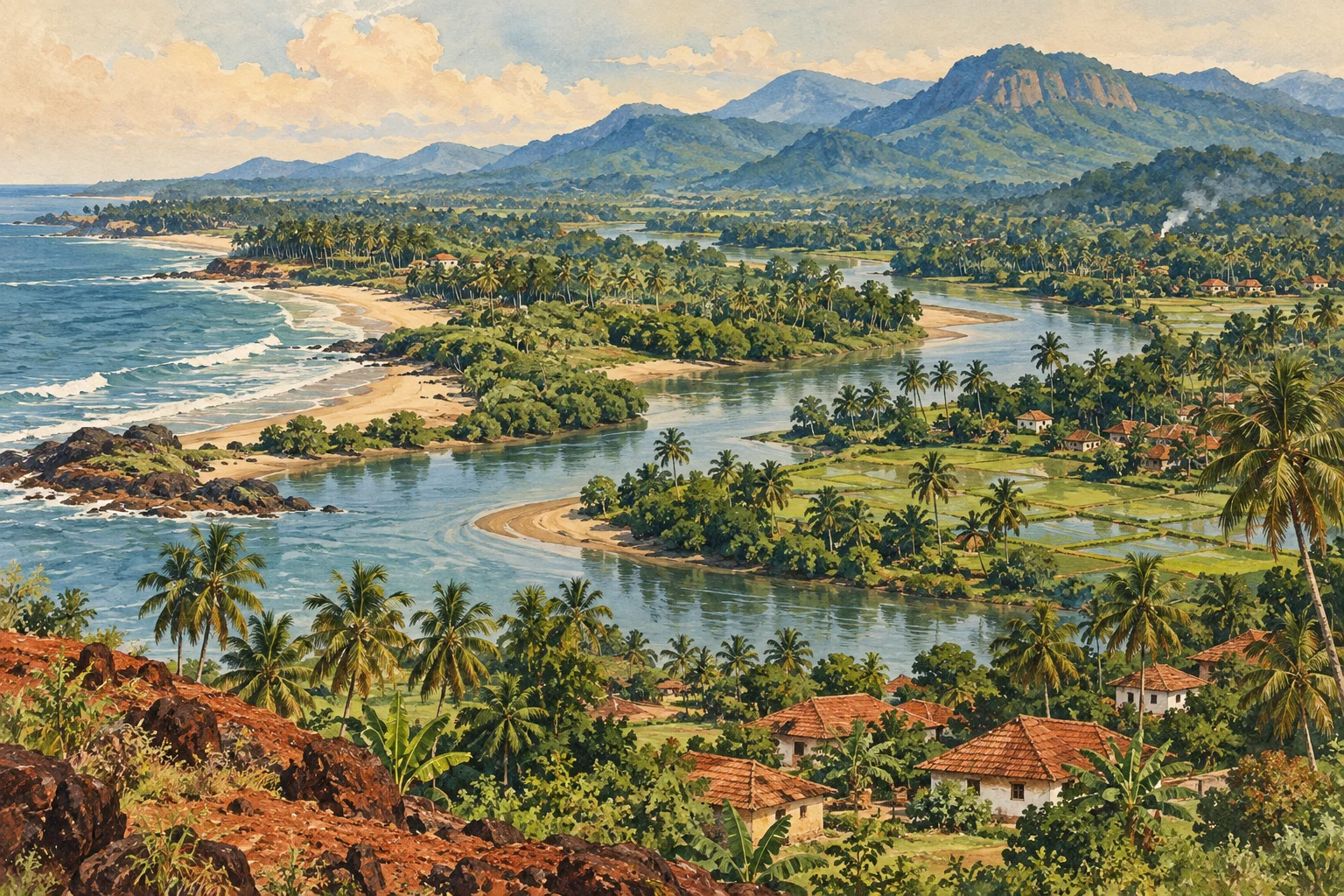
The district administration records two changes that help orient the modern map. The City Municipal Council was formed in 1995 with surrounding areas including Manipal, Malpe and Santhekatte. Udupi became a separate district in 1997. These are recent administrative milestones within a much older inhabited landscape. Beginning with that distinction makes room for a working harbour, an educational town, weaving communities and inland heritage alongside pilgrimage. The Tulunad region guide provides the broader cultural setting, including the reasons not to equate a district boundary with a single identity.
Names preserve stories, but stories are not all the same kind of evidence
The district’s history page presents an association between Udupi and the Tulu name Odipu. It also recounts a sacred explanation involving the moon, Shiva and the Sanskrit words udu and pa. The page identifies the latter as legend. Both belong in an account of local memory, provided their different status remains clear.
An etymological tradition can explain how people understand a place without establishing when a settlement first existed. The same principle applies to a temple narrative, a family recollection or a story attached to a lake. They are valuable records of meaning, but a historical date requires a different kind of support. For readers, this makes the history richer rather than poorer: one can appreciate the story as a story while leaving room for inscriptions, objects and documentary records. Our Barkur guide develops that distinction through a nearby landscape with an extensive historical record.
Malpe is a working harbour as well as a beach
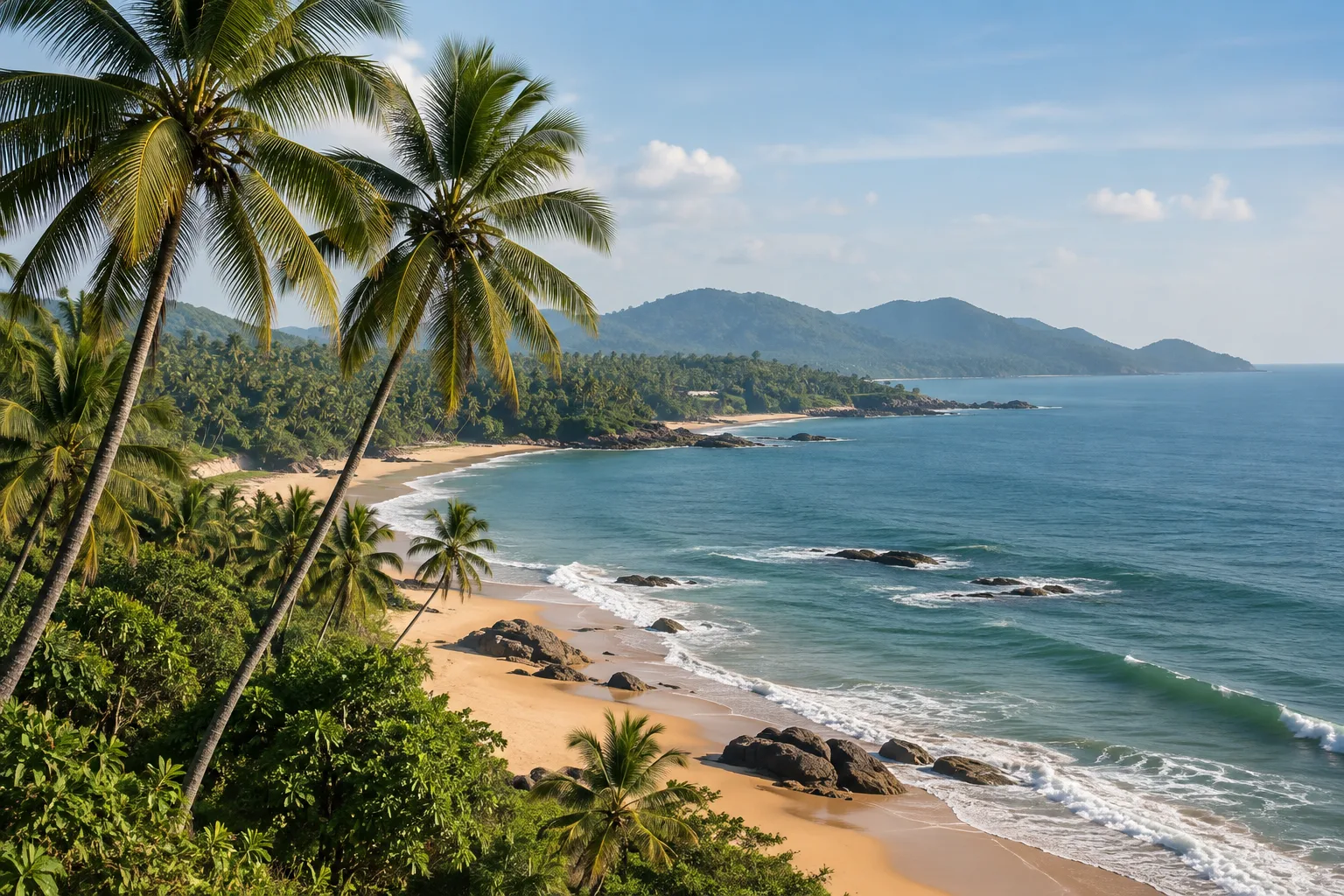
The Udupi administration describes Malpe as a natural port and an important fishing harbour. It also identifies the town’s strong association with the Mogaveera community. Those details are a useful corrective to an image of Malpe consisting only of sand, leisure boats and a sea view. Its waterfront belongs to livelihoods and community history.
Malpe also widens the meaning of Udupi’s food culture. A district associated nationally with vegetarian restaurants contains an important fishing economy. The harbour and the leisure beach are neighbouring parts of the waterfront with different purposes: one is organised around landing and working with fish, while the other is commonly approached as a place of recreation.
Manipal adds a twentieth-century chapter
Kasturba Medical College’s institutional history dates its opening in Manipal to 30 June 1953. Its earliest arrangement connected pre-clinical teaching in Manipal with clinical training at Wenlock District Hospital in Mangaluru. The account records the later development of a teaching hospital in Manipal. This is a concrete example of regional connections built through education and healthcare rather than only through older political or religious institutions.
This early link with Wenlock joins Manipal’s history to Mangaluru’s, rather than leaving the two towns in separate stories. The later development of facilities in Manipal changed that arrangement. In the Udupi landscape, the educational centre supplies a twentieth-century counterpart to Malpe’s harbour and the older inland centres of religious and political life.
Hasta Shilpa preserves buildings as cultural evidence
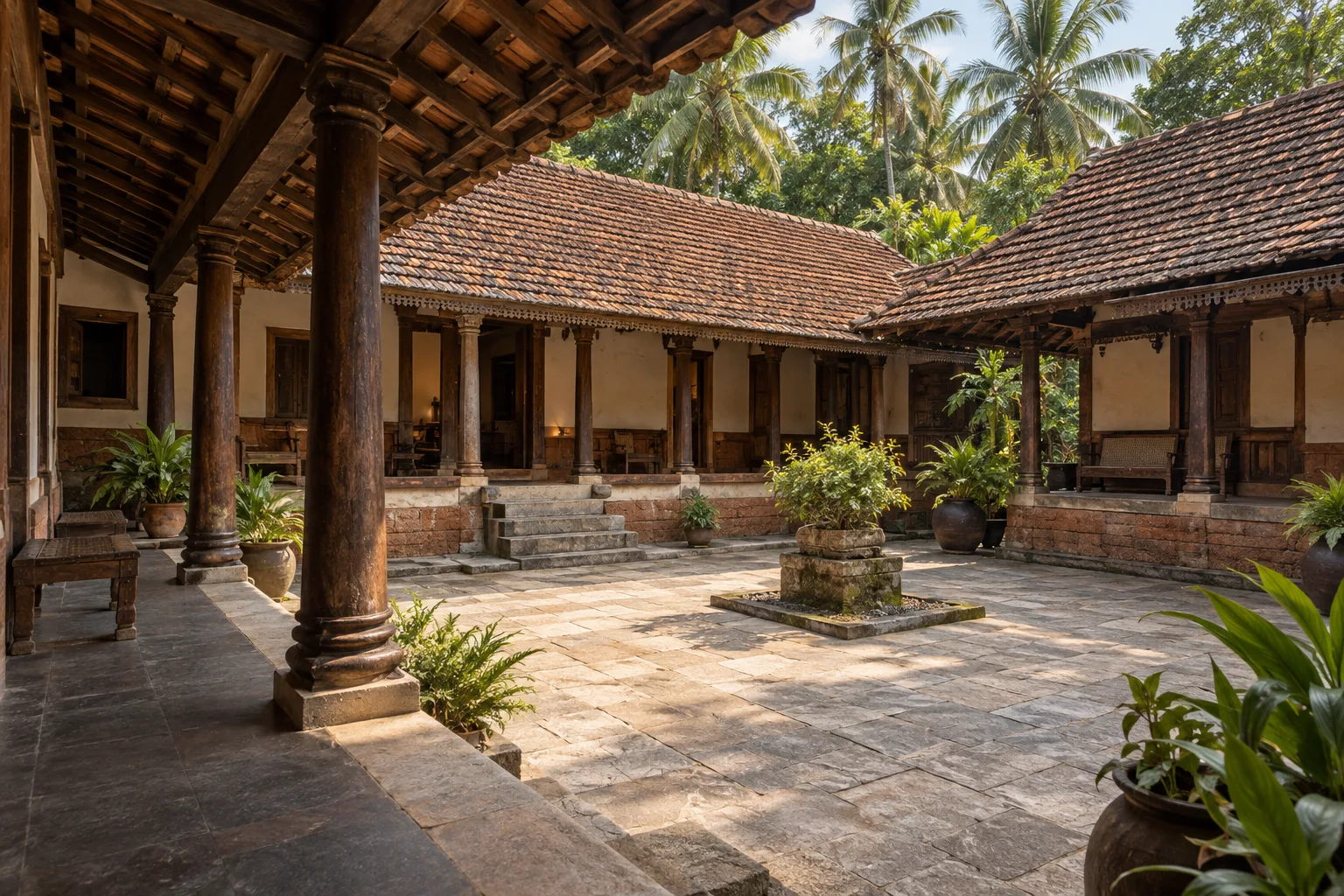
The Hasta Shilpa Trust describes its Heritage Village project in Manipal as an effort to conserve traditional buildings, objects of art and craft, and architectural work of cultural value. The Ministry of Culture’s museum directory identifies it as an ethnographic museum managed by a public charitable trust. This makes it a particularly relevant stop for anyone interested in the relationship between a building and everyday life.
A museum assembled around preserved structures offers comparison: different forms, materials and objects can be studied near one another. At the same time, the museum’s own labels and provenance matter because a relocated building no longer occupies its original social and physical setting. That is a feature to understand, not a reason to dismiss the collection. The distinction between the structure’s earlier life and its museum life should remain visible. Readers can pair this subject with our Guthu-house guide, which considers domestic heritage without treating every old house as the same type.
Udupi sarees connect a place name to skilled work
Udupi sarees appear in India’s registered geographical-indications list. A Development Commissioner for Handlooms record describes fine cotton yarn, contrasting borders and pallu, local dyeing, and production using Malabar frame looms. It places the weaving tradition in both Udupi and Dakshina Kannada. The name therefore points to a regional craft geography that is wider than the city alone.
Cotton fibre, contrast borders and the pallu give the tradition specific material features. Loom work and dyeing are part of that identity, rather than incidental stages behind a finished souvenir. Together with Pilikula’s weaving displays and Hasta Shilpa’s architectural collections, Udupi sarees show several ways in which skilled work remains visible in the region.
Food is a route into both familiarity and difference
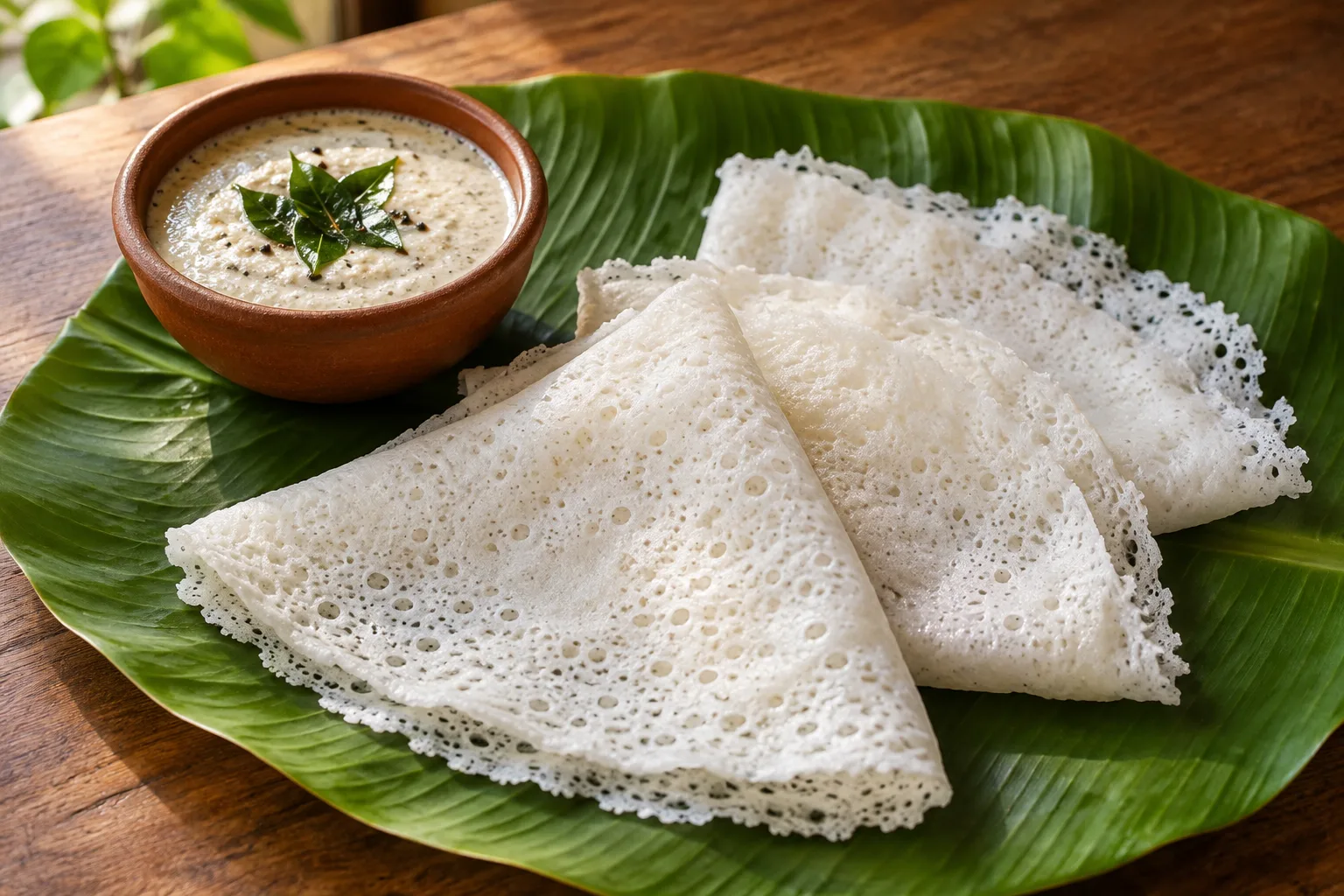
Karnataka Tourism associates Udupi with vegetarian meals and restaurants, while its current destination guide also acknowledges non-vegetarian food. It identifies dishes such as neer dosa, patrode and banana buns. These examples show why the familiar restaurant identity is an introduction rather than a complete culinary map. A city’s public reputation may be narrower than the food of its surrounding households.
Neer dosa is a rice accompaniment, patrode uses colocasia leaves in the dish itself, and banana buns are fried rather than baked. These are distinct forms, not substitutes for one another. Our Mangaluru food guide explains their ingredients, textures and serving contexts alongside other regional preparations.
Look inland as well as along the shore
The wider district includes Karkala, where the state tourism account identifies the Bahubali monument and Chaturmukha Basadi as major elements of Jain heritage. This matters to a cultural map of Udupi: its inland histories are not simply extensions of the Krishna temple town. Different centres developed their own institutions, patrons and visual forms.
Barkur adds another inland connection through its former political role and surviving inscriptions. The contrast with Karkala is useful: political administration and Jain patronage provide different routes into the district’s past. Combined with Malpe and Manipal, they make a regional picture that includes maritime work, religion and modern education without reducing every place to a variation on the temple town.
A district connected by different kinds of work
Temple heritage remains central to the city, but it sits within a larger living setting. The coast supplies a working landscape; Manipal adds a history of institutional ambition; weaving makes skilled labour visible; museums preserve buildings and objects; inland towns extend the record in other directions. Reading these together allows Udupi to retain its familiar associations while becoming more fully itself. It is a place of worship, certainly, and also a place where people study, make, trade, fish, cook and build lives that cannot be contained by a single label.
Research notes
Udupi district: About District; Udupi district: History; Udupi district: Places of Interest; Kasturba Medical College: History and Progress; Hasta Shilpa Trust: Vision and Mission; Ministry of Culture: Directory of Museums in India; Intellectual Property India: State-wise Registered GI of India; Development Commissioner for Handlooms: Karnataka weavers and products; Karnataka Tourism: Udupi destination guide; Karnataka Tourism: Udupi district heritage guide.
Research checked 7 October 2026. Our editorial approach.