One coastline, several different days out
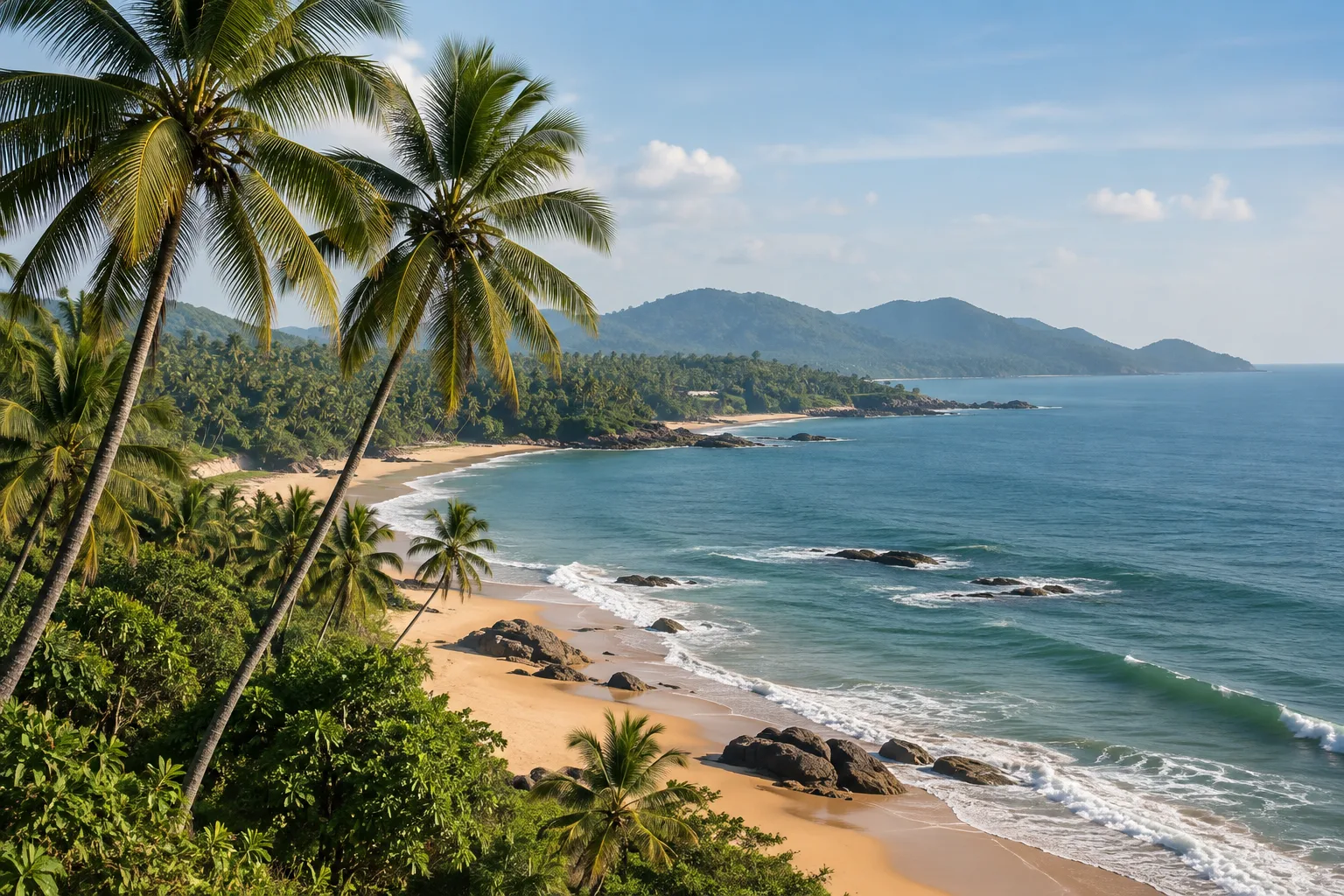
Panambur and Tannirbhavi make sense for a beach outing from Mangaluru. Kapu, often written Kaup, is the choice for a lighthouse landscape. Malpe combines a popular beach with a working fishing town, while Maravanthe is best understood through the striking relationship between its river, road and sea. Someshwara and Surathkal bring rocky headlands into the picture.
These places share the Arabian Sea, but they are not interchangeable stops on a sunset checklist. A harbour, a sandy recreation beach and a wave-washed rock platform invite different kinds of visits. The most useful starting point is to choose a base and a landscape that interests you, then leave enough time to enjoy it. This guide covers the Mangaluru and Udupi district coast rather than claiming that every place falls within one fixed cultural boundary of Tulunad.
| Place | Main reason to go | Useful starting point |
|---|---|---|
| Panambur | A popular city beach and organised recreation | Mangaluru |
| Tannirbhavi | A beach visit paired with the Gurupur river landscape | Mangaluru |
| Someshwara | Large coastal rocks and a temple setting | Ullal |
| Surathkal | A lighthouse and rocky shoreline | Northern Mangaluru |
| Kapu / Kaup | A historic lighthouse on a granite outcrop | Udupi or the Mangaluru–Udupi route |
| Malpe | Beach, fishing harbour and island excursion options | Udupi |
| Maravanthe | The close parallel of river and sea | Kundapura area |
Panambur: a beach in a port city
Panambur is one of Mangaluru’s established recreation beaches, near the city’s modern harbour. Karnataka Tourism describes organised activities, food stalls and lifeguard provision here. That makes it a useful first choice when members of a group want different things from an outing: a walk, refreshments or an activity offered by a local operator.
Treat the activity list as a description of the beach’s visitor economy, not a promise that every service operates every day. Weather and local instructions decide what is available. A lifeguard presence also does not make every part of the shoreline safe to enter.
The setting helps explain Mangaluru itself. Port infrastructure and a leisure beach belong to the same stretch of coast. Pairing the visit with our Mangaluru history guide gives those harbour views more meaning than a description based only on the colour of the sand.
Tannirbhavi: think about the river as well as the sea
Tannirbhavi, also written Tannirbavi, is another established beach near Mangaluru. Its appeal is an uncomplicated stretch of shore that can be considered alongside the river landscape around Boloor and Sultan Bathery. The district’s visitor information identifies it as a sunset destination, but its value is not limited to arriving just before the sun disappears.
Allow time to notice how the coastal city changes as you move between its river edge and open sea. On a map these waters may look close; on the ground, road access, river crossings and the position of your starting point matter. Check the route you intend to use instead of assuming a ferry mentioned in an older travel account is operating.
A combined river-and-beach visit also opens a larger subject: why settlements, landing places and transport routes developed along estuaries. Our guide to Tulunad’s rivers follows that story inland.
Someshwara: the shore in stone
South of Mangaluru, in the Ullal area, Someshwara is distinguished by the large rocks known as Rudra Shile and the nearby Somanatha temple setting. It offers a different visual experience from a broad, relatively uniform sandy beach. The relationship between stone, surf and sacred place is its strongest reason to visit.
Make the view your main activity. A wave-washed rock is not an ordinary viewing platform, and a dry-looking surface does not establish that it is safe. Stay within permitted areas and follow instructions at the site. If you visit the temple too, allow for the difference between a public beach and an active place of worship.
Someshwara works best as part of an Ullal outing rather than a hurried detour between northern beaches. Give the place its own space in your day.
Surathkal and Kapu: two lighthouses, different histories
Surathkal’s lighthouse belongs to the modern navigation history of the coast. The Directorate General of Lighthouses and Lightships records construction during 1969–72 and the start of its light on 15 May 1972. Its later radio and positioning equipment is a reminder that a lighthouse is working maritime infrastructure as well as a familiar coastal landmark.
Kapu has an older tower. The lighthouse authority dates its commissioning to 30 April 1901 and describes the granite rocks around the site. The familiar black-and-white bands were part of later improvements in 1935. These details give a visit something to look for beyond the silhouette: the tower’s setting, the contrast of painted masonry against dark rock, and its position facing the sea.
Choose between them according to your route rather than trying to fit both into a crowded afternoon. Check current admission arrangements before planning a climb. A beach may be accessible while the tower itself is closed, and a view of a lighthouse does not require entering its operational spaces.
Malpe: beach, harbour and island are separate experiences
Malpe is closely associated with Udupi, but it is also a fishing town with a substantial life of its own. The district administration describes a natural port and an important fishing harbour, and recognises the long presence of the Mogaveera fishing community. Those facts deserve a place in any account of a town often reduced to its tourist beach.
Separate your plans into three possibilities: time on the beach, a respectful view of the working harbour where access is permitted, or a boat excursion towards St Mary’s Islands when services operate. They are not one attraction with a single opening time. Boats, fish handling and transport are people’s work; keep clear of unloading areas and ask before photographing workers closely.
If your main interest is Udupi’s wider cultural life, combine Malpe with the subjects in Udupi beyond temples. If the island excursion is essential, confirm the service locally before building the rest of your day around it.
Maravanthe: more than a photograph from above
Maravanthe is known for the coastal road running between the Arabian Sea and the Souparnika river. Seeing the waters close together is the attraction. It is also a reason to slow down your expectations: a widely circulated aerial image cannot tell you where to park, cross the road or stand safely at ground level.
There is a working coast here too. An ICAR field visit in October 2024 documented fishing, landing, icing and transport at Maravanthe, including the work of fisherwomen moving the catch towards insulated vehicles. Sardines and mackerel were among the fish recorded. This is a living settlement with an economy, not an empty strip waiting to become a scenic backdrop.
Use a designated stopping place and explore only where access is permitted. Seeing river and sea together is also a good introduction to the wider subject of estuaries. Our rivers guide looks at other coastal systems, including the Netravati, Gurupura, Swarna and Sita.
Plan around conditions, not a promise of calm water
The southwest monsoon changes the coast. Rain, waves and access restrictions can affect a beach visit, an island boat trip and the road journey itself. Even outside the monsoon, the presence of other visitors is not evidence that a particular stretch is safe for swimming. Check official weather and ocean advisories, and follow the instructions of lifeguards and local authorities.
INCOIS provides ocean information through its SAMUDRA service, including marine forecasts and warnings. Use current information alongside conditions at the actual beach. This guide deliberately does not offer a permanent list of swimming spots or year-round ferry timings.
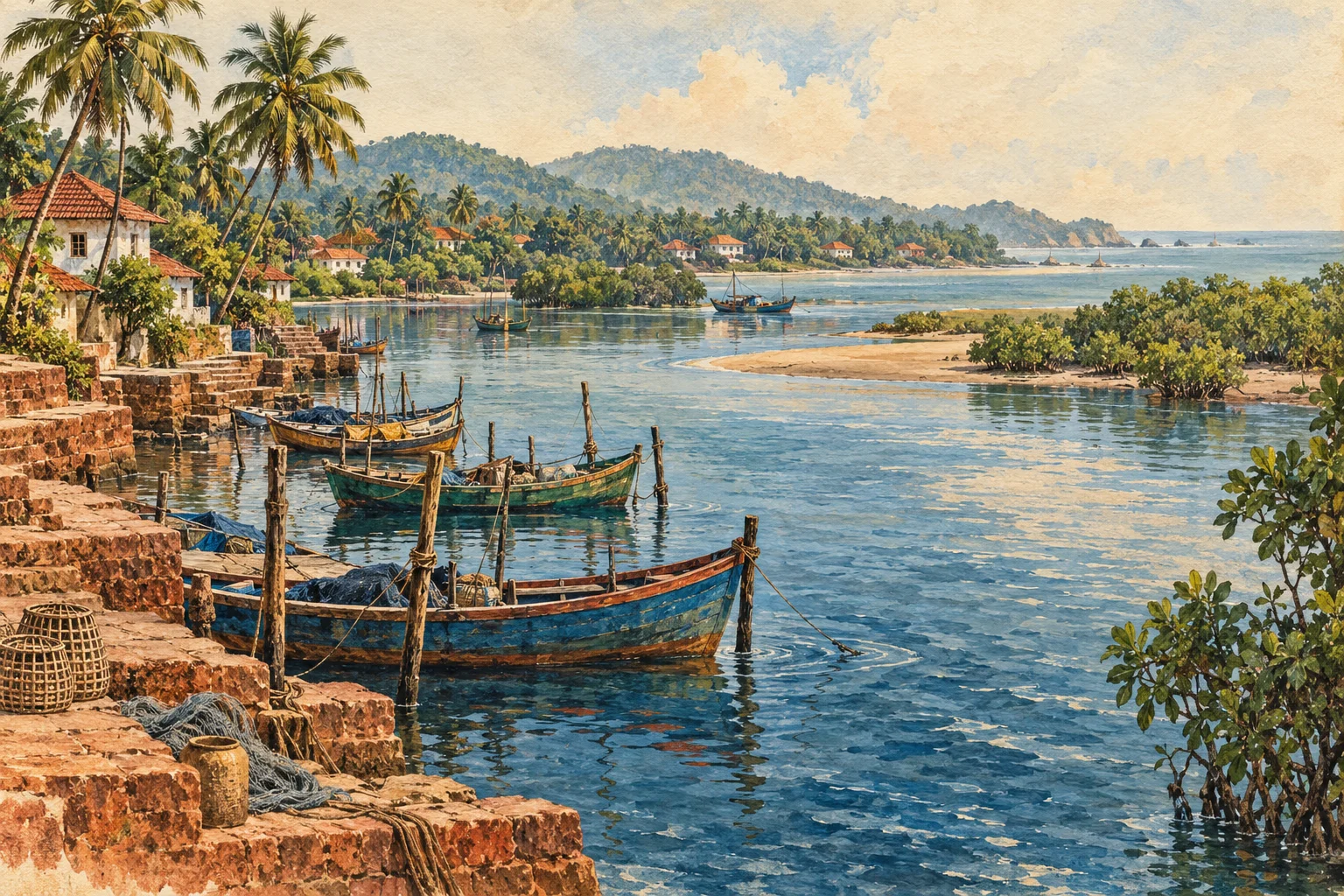
For a relaxed first visit, choose one principal beach and one nearby interest, such as a lighthouse, a river view or a town meal. Leave room for changed conditions and for returning in daylight. The coast rewards attention to its ordinary details: a repaired boat, a shaded lane, the line of a riverbank and the changing light on a tiled roof.
Research notes
Dakshina Kannada district administration, Places of Interest: coastal sites; Karnataka Tourism, Panambur Beach; Directorate General of Lighthouses and Lightships, Kaup Lighthouse; Directorate General of Lighthouses and Lightships, Surathkal Lighthouse; Udupi district administration, Places of Interest: Malpe; Karnataka Tourism, Udupi district coastal overview; ICAR Central Coastal Agricultural Research Institute, Maravanthe field visit, 5 October 2024; INCOIS, SAMUDRA ocean information service.
Research checked 7 October 2026. Our editorial approach.